

Identity Formation

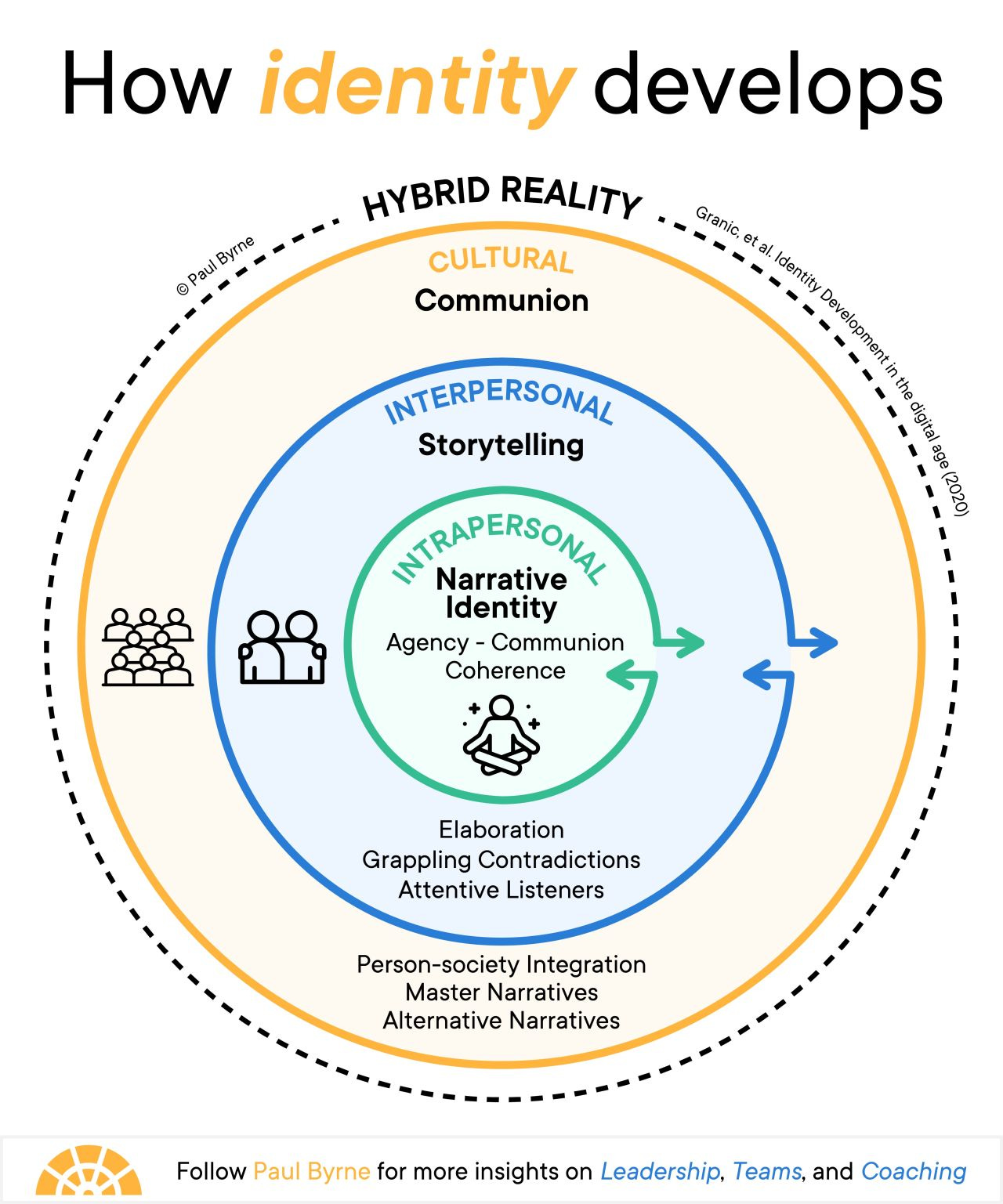
Narrative identity is the internalized and evolving story we create to make sense of our past experiences, present circumstances, and future aspirations. It forms the cornerstone of our self-concept—an ongoing process of reflection, experimentation, and integration that helps us create a coherent sense of who we are.
This self-authored narrative isn’t static. It grows as we grow—shaped by our internal drives, our relationships, and the cultural waters we swim in.
Exploring the Layers of Identity Formation:
🧍🏻 1. Intrapersonal Factors
At the core of identity formation are internal drivers that influence how we see ourselves and the direction we choose in life. Two essential motivators:
Agency: The desire to assert oneself, make choices, and pursue personally meaningful goals.
Communion: The need for connection, intimacy, and belonging within a broader social world.
Throughout life, we navigate the tension between agency and communion. In early adolescence, identity is often shaped through the lens of peer approval. As we mature, we begin to explore autonomy, voice, and purpose. The adult task is integration: becoming fully ourselves while staying meaningfully connected to others.
👩🏽🤝👨🏼 2. Interpersonal Factors
Identity doesn’t form in isolation. We refine who we are in conversation with others:
Storytelling Partners: Friends, mentors, family members—those who help us articulate and make sense of our evolving story.
Social Feedback: The responses we receive from others that reinforce or challenge how we see ourselves.
These relational dynamics shape our sense of self over time. Feedback tools like the Leadership Circle Profile can accelerate this process by revealing how our self-perception aligns—or misaligns—with how others experience us.
🏛️ 3. Cultural Factors
We don’t just tell personal stories—we do so within broader cultural narratives:
Master Narratives: Widely held societal stories about success, leadership, gender, or identity that offer scripts to follow—or resist.
Alternative Narratives: Stories from subcultures or marginalized communities that provide different models of meaning, resistance, and belonging.
Cultural context can either constrain or liberate the self. Leaders from non-dominant groups, in particular, may find themselves navigating complex layers of identity, often having to rewrite inherited scripts to create space for authenticity and impact.
—
As leaders, coaches, and human beings, understanding the layers of identity formation—internal, relational, and cultural—helps us grow ourselves and support others.