

On Relating

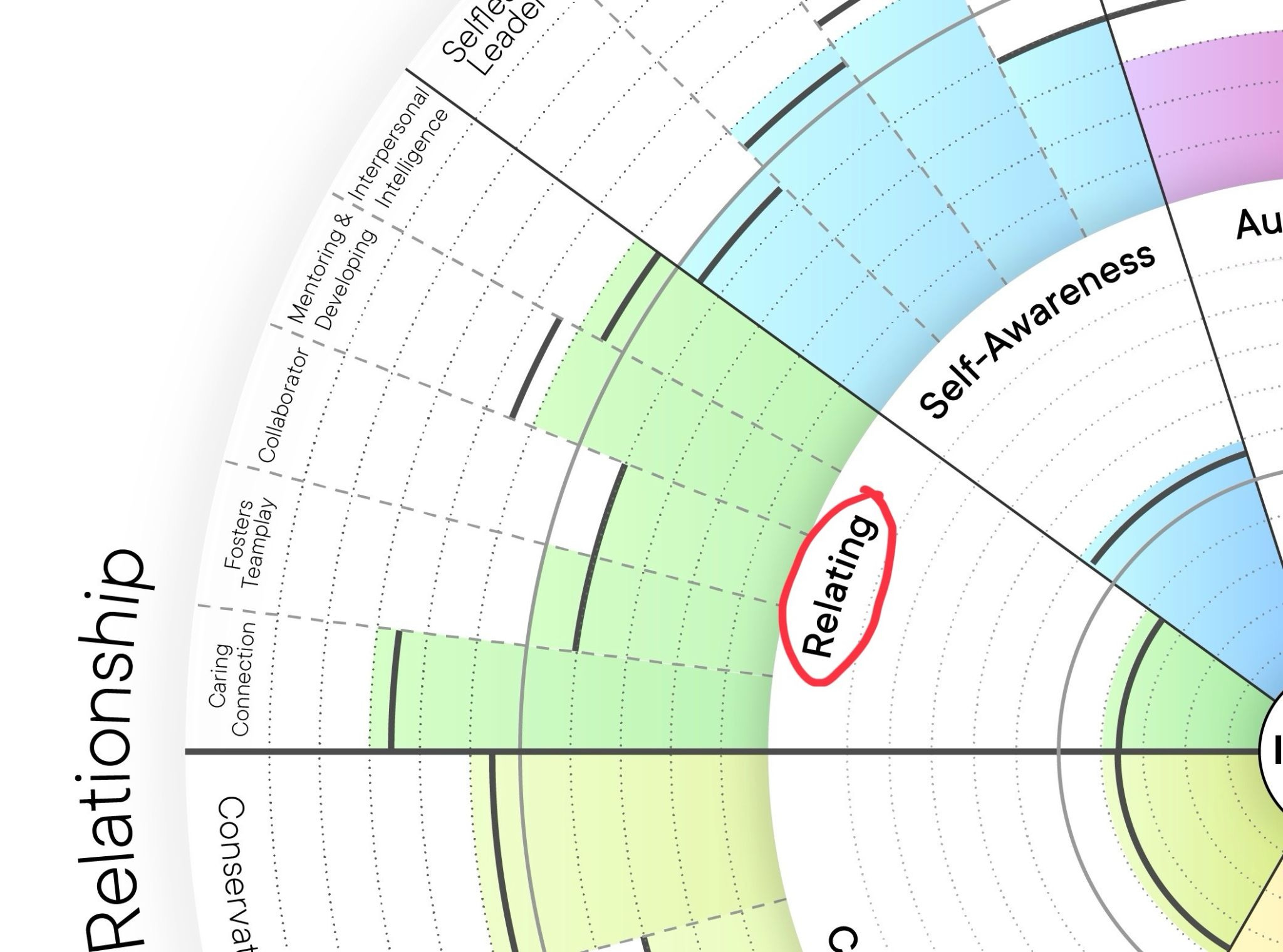
One of the most common unforced errors I see senior leaders make—especially during moments of pressure or uncertainty—is trying to go it alone.
Sometimes it’s an effort to protect their teams from complexity. Other times, it’s about maintaining a sense of control or proving they’ve got it handled. But the impulse is the same: retreat, contain, figure it out solo.
The irony? These are the exact moments when leaders most need to lean into connection, not away from it.
Yes, thinking and doing are essential. But a leader’s true leverage—their ability to create results at scale—comes from the quality of their relationships. Relationships are not an accessory to leadership. They are the multiplier.
At one global company, we recently analyzed thousands of Leadership Circle Profiles. The trait that most consistently differentiated the top-performing senior leaders?
Relating.
Not charisma. Not decisiveness. Not intelligence. Relating.
To be clear: this doesn’t mean being liked, agreeable, or emotionally expressive. It means cultivating trust, empathy, and the capacity to co-create. It means being able to truly hear others, offer feedback that strengthens, and hold tension without defensiveness.
Relating isn’t the only thing that matters. The best leaders integrate Relating and Achieving—they drive results through strong, generative relationships. That blend is what shows up again and again in the top quartile of our global database.
I still sometimes hear Relating described as a “soft skill.” I’ve started calling it something else:
Leadership Leverage.
Relating is how you scale you.