

Where Do We Go From Here?

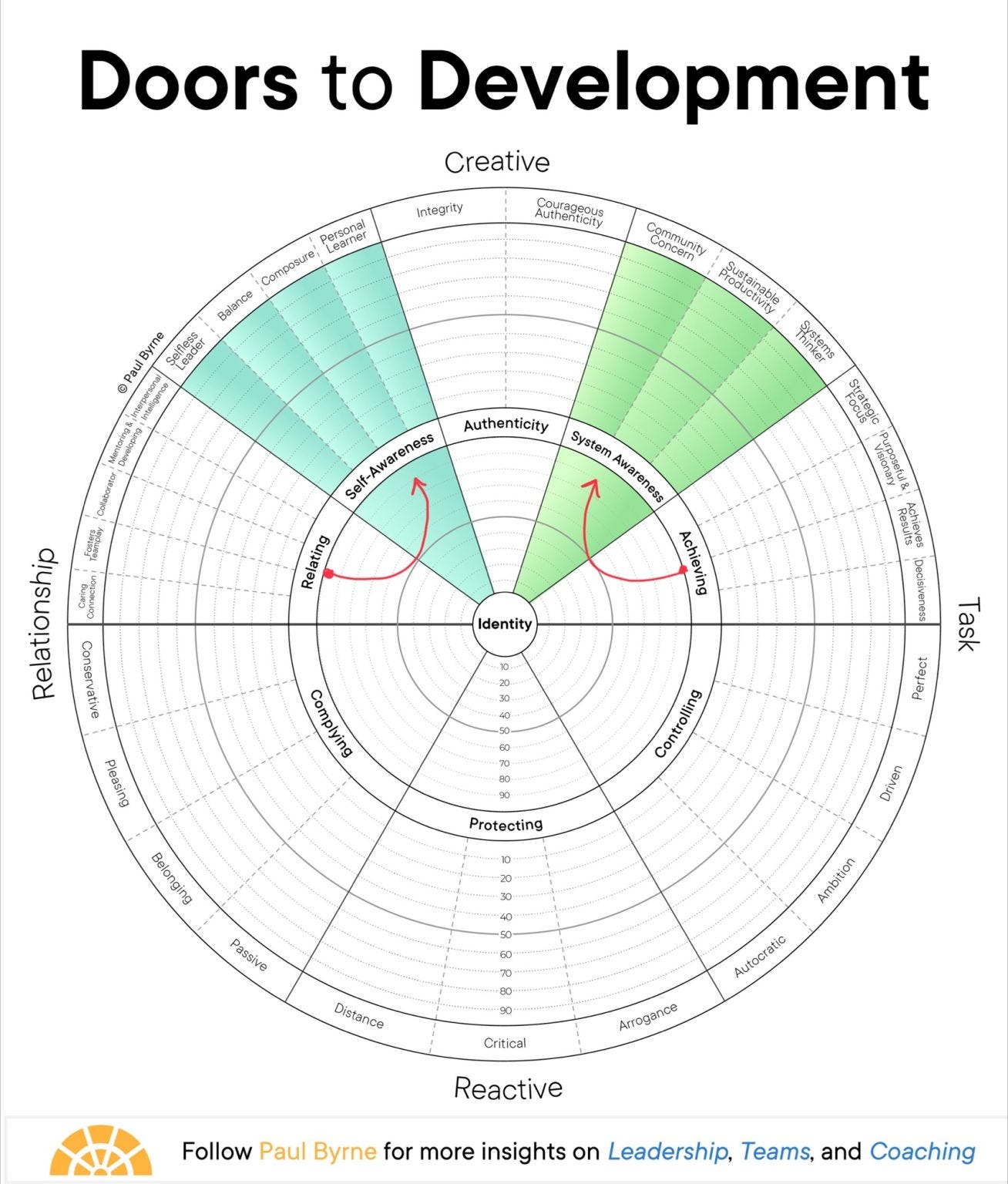
This question often surfaces—sometimes quietly, sometimes urgently—when I’m coaching a leader.
After completing a 360 assessment like the Leadership Circle Profile, setting development goals, and running a few leadership experiments, the question inevitably arrives: What’s next?
Early in a coaching engagement, much of the focus is on increasing awareness—understanding reactive patterns, recognizing impact, and experimenting with new ways of showing up. These leadership experiments often center around Relating and Achieving—the “engine room” of leadership effectiveness. This is where the work gets done: through relationships, intellect, and execution.
But there’s a deeper, often more transformative dimension of leadership growth—one that involves shifting focus from the output of leadership to the gearing. That’s where Self-Awareness and Systems Awareness come in.
If Relating and Achieving generate the power of leadership, Self and Systems Awareness determine how well that power translates into sustainable forward movement. They’re the transmission, the directional intelligence.
When a coaching conversation feels stuck or overly tactical, shifting the focus to Self and System often unlocks a new territory of insight and growth.
Here are a few of the questions I use to open that next chapter of the conversation:
🪞 Self-Awareness
What recent experience has shifted how I feel or act—and what does it reveal about me?
—Exploring emotional responses uncovers patterns, triggers, and hidden beliefs that shape behavior.When do I feel most alive, fulfilled, or ‘in flow’?
—These moments offer clues to deeper values, purpose, and the environments where your leadership can thrive.What am I avoiding—and why?
—Often, our next move is hiding just behind the fear or resistance we’re reluctant to name.
⚙️ Systems Awareness
What dynamics or patterns do I see in my team, organization, or environment?
—Noticing how parts of a system interact reveals leverage points for change—not just for you, but for the whole.What unintended consequences have emerged from past decisions?
—Looking at outcomes (especially the messy ones) helps deepen our understanding of complexity and influence.What external forces are shaping our system—and how might we adapt?
—This question expands the view to include broader environmental shifts and encourages proactive adaptation.
When leaders begin to work from this inner and systemic lens, their growth becomes less about managing tasks and more about transforming how they see, interpret, and influence the world around them.
So—where do you go from here?